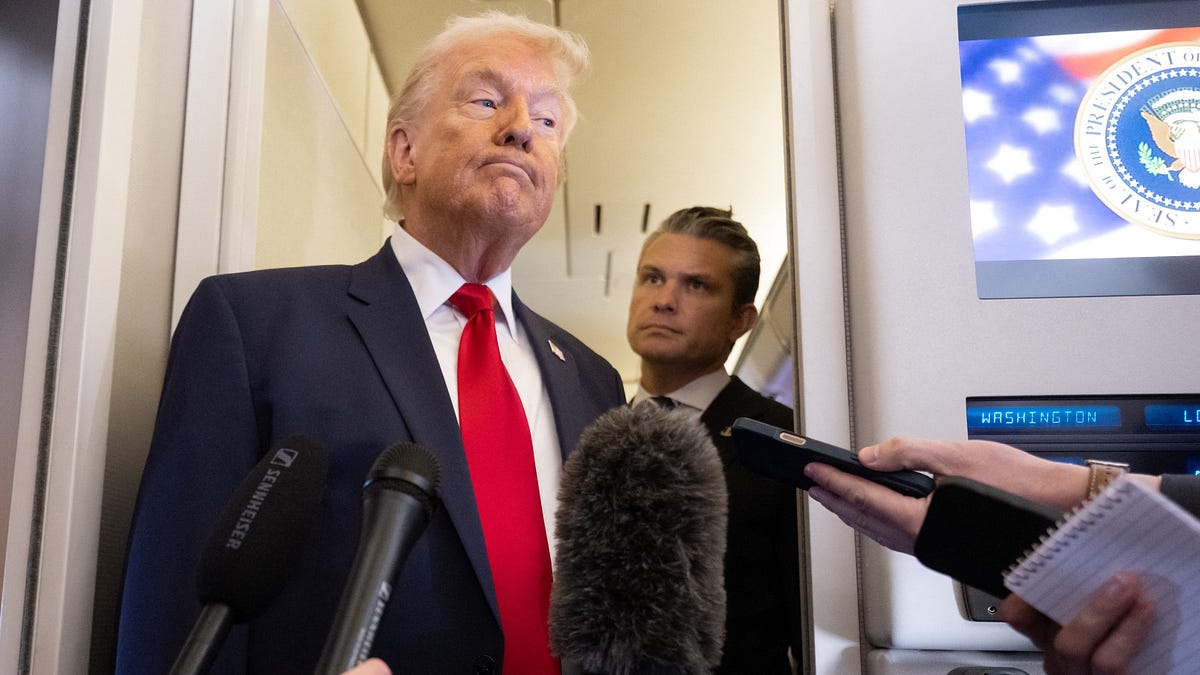
Donald Trump bombed Iran expecting an overnight victory. Instead, he got a 14-country war, at least seven dead US servicemembers, the worst US military civilian casualty incident in decades, and skyrocketing global oil prices.
It’s been six months since then, but I still remember my time as a US intelligence analyst like it was yesterday. I analyzed satellite imagery of Iran for years, watching their nuclear program grow from nothing to a potential game-changer.
I knew exactly where the Iranian missile sites were located and could predict with near certainty which ones would be targeted in any future conflict. But even with that knowledge, I still underestimated how quickly things would escalate.
The initial airstrikes were followed by an immediate response from Iran’s Revolutionary Guard Corps (IRGC) - a force of 125,000 troops who are trained to fight asymmetrically and can operate behind enemy lines.
Within hours, the IRGC had launched missile attacks on several US military bases in Iraq. The US responded with airstrikes against Iranian targets including an IRGC headquarters building in Tehran.
As the days turned into weeks, it became clear that this was no longer just a limited conflict between two nations - but rather a full-blown regional war involving at least 14 countries from Europe to Asia and even North Africa.
The US military had deployed thousands of troops to Kuwait, Qatar and Bahrain. Britain sent its own forces to the region while France and Germany followed suit.
Iran’s response was just as impressive - with their Quds Force operating in Iraq against American interests, while their naval units patrolled the Strait of Hormuz blocking oil shipments from neighboring countries.
Meanwhile, global oil prices skyrocketed due to the shutdown of major oil fields and pipelines. The world economy teetered on the brink of collapse as trade wars intensified between China and the US, with both sides imposing tariffs on each other’s goods.
It was a chaotic period in which I felt like my skills were being stretched to their limits - but also one where the US military showed that it still has an edge when pushed into crisis mode.
In hindsight, it seems clear now that Donald Trump never had any real plan for what would happen after he bombed Iran. He expected a quick victory and then moved on with his life, leaving others to deal with the fallout.
But even though we may not know exactly how this war will end - or when it will finally stop, one thing is certain: the US military has learned some valuable lessons from its recent brush with disaster.
Source: Zeteo.com
Author: Harrison Mann
This post was automatically generated by Omashe AI.