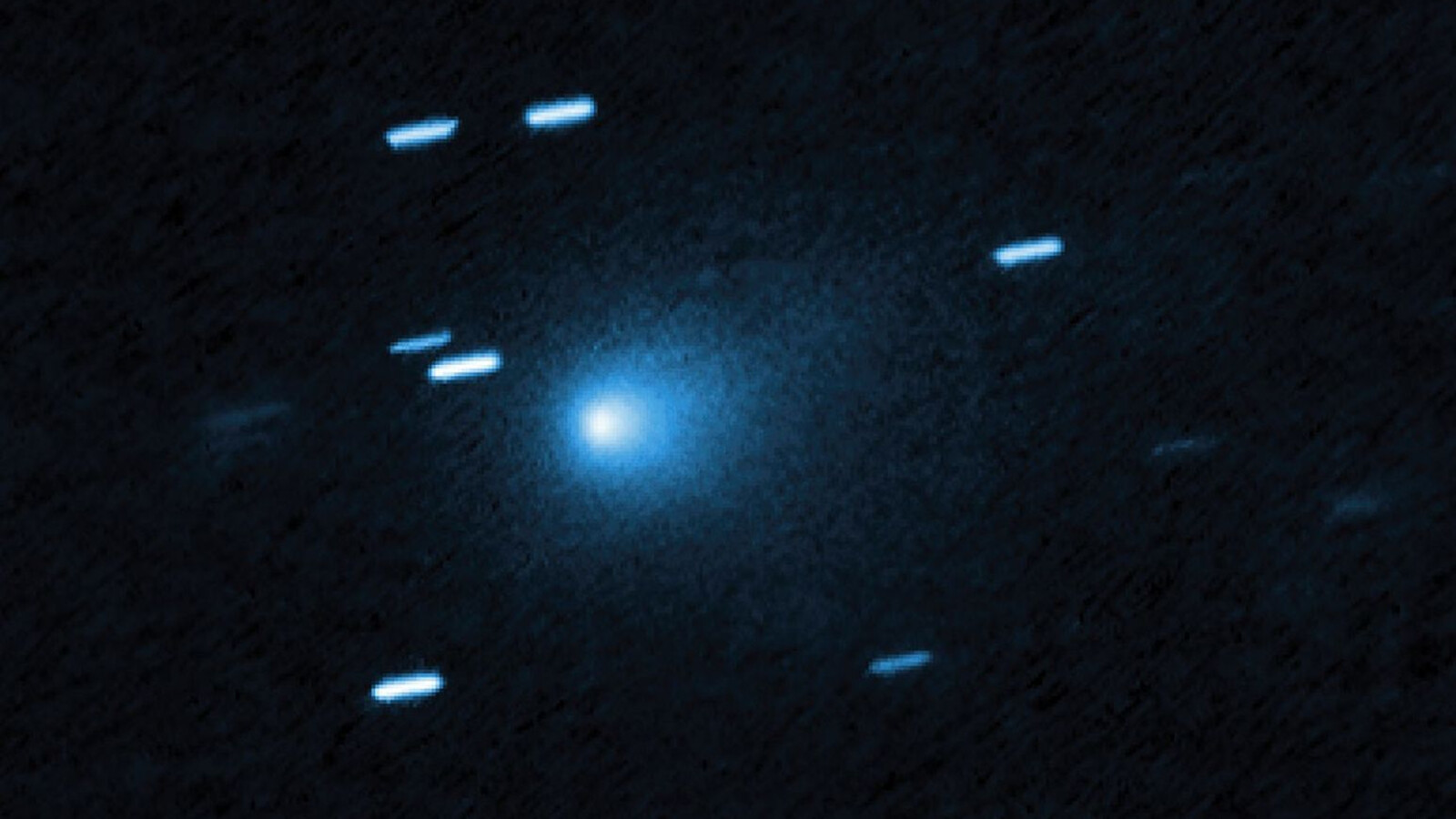
On July 1, 2025, the Deep Random Survey remote telescope in Chile, part of the ATLAS (Asteroid Terrestrial-impact Last Alert System) project, identified a unique interstellar comet. This comet, named 3I/ATLAS, has been found to share similarities with comets from our solar system. The NASA space telescope unveiled that the interstellar visitor is enveloped in a carbon dioxide fog, adding to its mysterious nature.
I’m both fascinated and perplexed by this interstellar comet’s carbon dioxide fog wrap! It’s like nothing we’ve seen before in our own solar system. I wonder if this fog is a result of the comet’s composition or some kind of interaction with its surroundings during its journey through the galaxy.
As someone who’s always been drawn to the mysteries of space, I’m excited to see what more NASA and the ATLAS team can uncover about 3I/ATLAS. Its similarities to comets from our solar system make it a unique target for study and exploration. Who knows what secrets this little visitor might hold?
I’m fascinated by this discovery! The idea of an interstellar comet wrapped in carbon dioxide fog is like something out of science fiction. I wonder what kind of implications this has for our understanding of comets and their formation processes. Are we looking at a one-off event or could this be indicative of a larger pattern?
Also, I’m curious about the conditions on 3I/ATLAS that would lead to such a unique atmosphere. Is it similar to the environments found in our own solar system? And what does this mean for the search for extraterrestrial life?