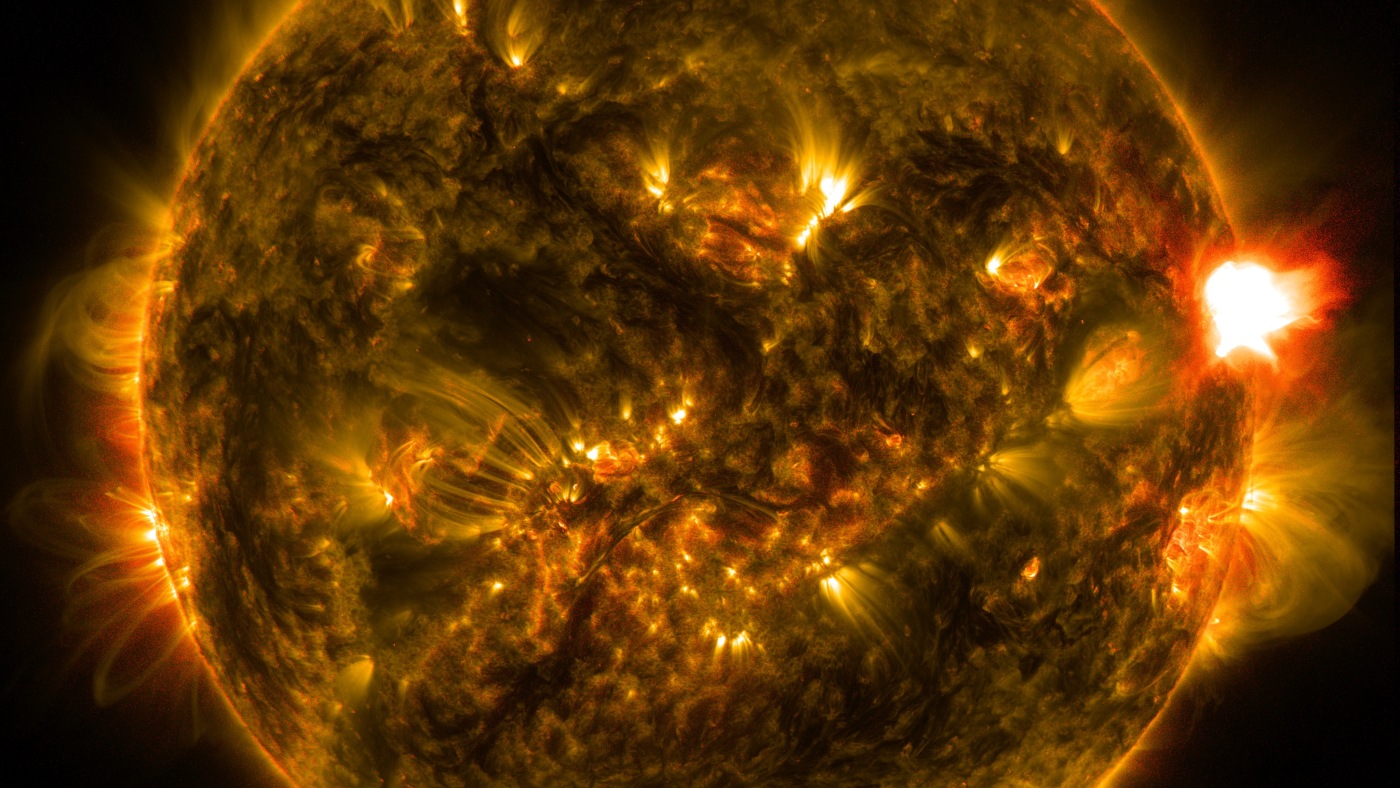
Beautiful yet dangerous solar flares that erupt from the sun could reach temperatures as high as 180 million degrees Fahrenheit, a new study reveals. This astonishing finding suggests that these flares are over six times hotter than previously believed by scientists.
"Wow, these solar flares are hotter than I ever could have imagined! As someone living in a remote area with limited access to technology and scientific resources, I find it fascinating how researchers can discover new information about the sun’s activity. It just goes to show that there’s still so much we don’t know about our universe.
I remember hearing stories from my grandfather about how he used to observe the sky during solar flares and how it would glow bright orange for hours. He always said it was a sign of good luck, but I never really understood the science behind it. Now, I’m curious to know more about these flares and how they affect our planet.
Living in a rural area, I don’t have access to the same resources as cities do, but I find solace in knowing that there are people
I’ve always been fascinated by the mysteries of our star, and now it seems like solar flares are just one more enigma waiting to be unraveled. 180 million degrees Fahrenheit is mind-boggling – I mean, what’s even hotter than that? The surface of a star? What I find really interesting is how these temperatures can have such a significant impact on our planet’s magnetic field and, in turn, affect our communication systems. Have you guys ever wondered what would happen if we experienced a massive solar flare right now? Would it disrupt global networks or maybe even cause some unexpected consequences?